AI Review Layer

for Construction Documents

A new intelligence layer for construction coordination - detect inconsistencies in 2D drawings today,

and turn every review decision into reusable project memory.

Problem

Manual coordination of design changes

is costly — most of all in public construction.

In mid-size firms, a few senior architects are stretched thin while junior architects carry the review load. Decisions live scattered across PDF markups, emails and meeting notes — easily lost and impossible to reuse.

Frequent design changes

Manual cross-checking of frequent design changes increases risks to project timelines and budgets.

€70–85B

Invested annually in public construction in Germany.*1

High risk of errors

The manual process leads to additional orders — delays and increased public costs that undermine project efficiency and stakeholder trust in public construction initiatives.

40%

Average cost overruns - 50–60% driven by mid-project design changes.*2

*1 Destatis, Public Budget Expenditures for Construction (2024).

*2 Hertie School of Governance, Large Infrastructure Projects in Germany (2022); Ernst & Young, Construction & Real Estate Survey; Roland Berger, Construction Radar 2024–25.

MVP

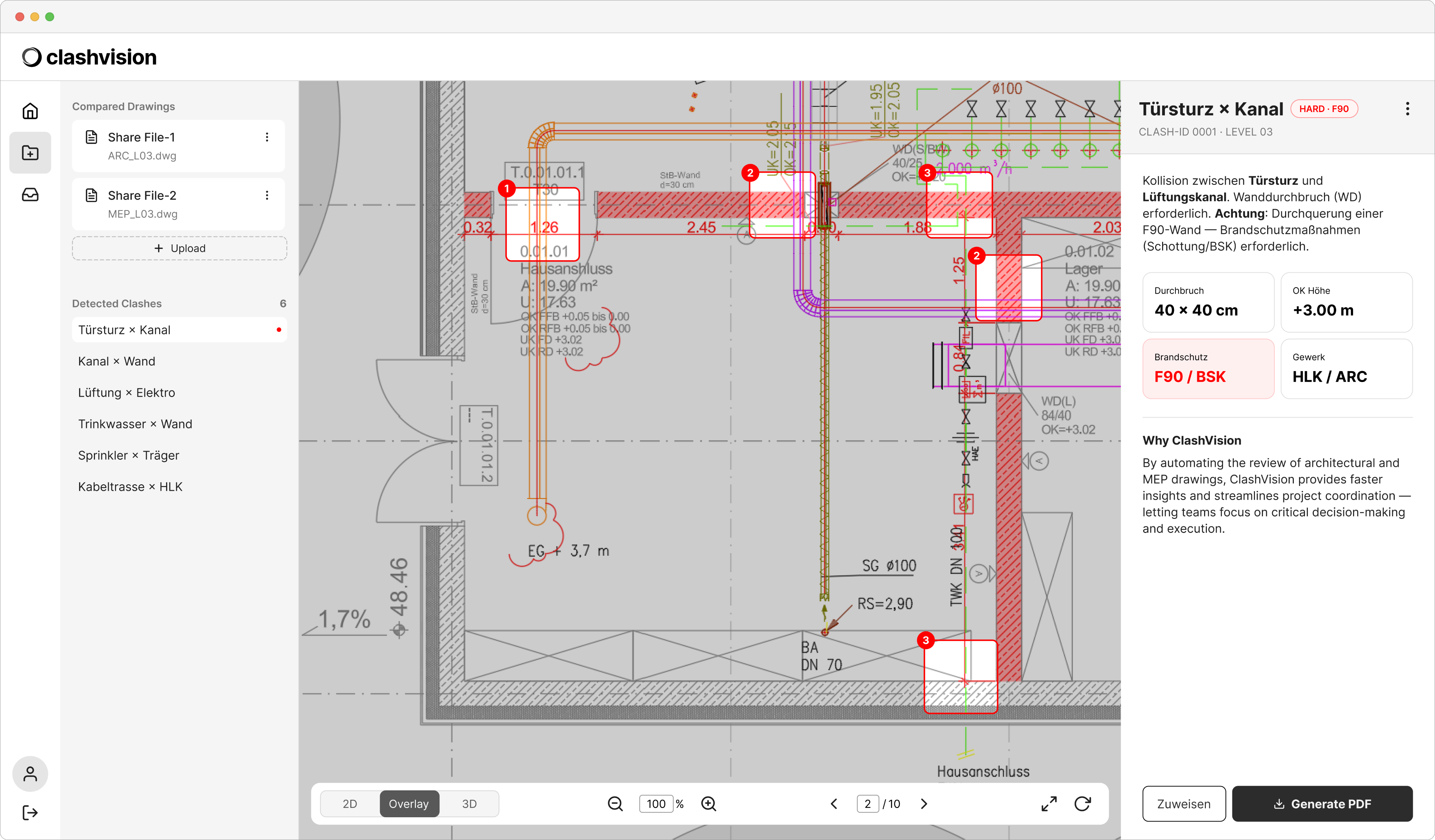
See coordination clashes, in context.

A new intelligence layer for construction coordination - detect inconsistencies in 2D drawings today,

and turn every review decision into reusable project memory.

Software dashboard showing sustainability metrics including energy use, emissions trend, and goal progress

ClashVision supports coordination and surfaces potential issues for review — it does not replace licensed professionals and does not grant approvals. Valid approval must always be obtained from qualified architects and engineers.

Early MVP Preview. This prototype is provided for illustrative purposes only, and features, workflows, and outputs may change as development progresses. ClashVision is being developed with privacy-by-design principles and GDPR-aligned data handling practices in mind. Customers retain ownership of their project data, documents, and generated outputs at all times. All concepts, workflows, and technologies presented on this website are proprietary to ClashVision and are protected by applicable intellectual property laws.

Supported by

How it works

From manual checking to AI-assisted review.

A new intelligence layer for construction coordination - detect inconsistencies in 2D drawings today,

and turn every review decision into reusable project memory.

Upload

Drop in your 2D drawings — PNG, JPEG or rasterized PDF.

AI Review

AI vision flags clashes and inconsistencies automatically.

Issue Structuring

Findings become structured, traceable issues with history.

Review Timeline

A searchable record of every decision over time.

  • Icon of an arrow pointing up right

    Detect inconsistencies

    AI-assisted review of 2D drawings catches the critical points a tired reviewer skips.

  • Icon of an arrow pointing up right

    Structure every finding

    Turn review comments into traceable issues — not lost in inboxes and PDFs.

  • Icon of an arrow pointing up right

    Preserve decisions

    Keep design rationale across revisions and projects, ready to reuse.

The platform

Detect today. Remember tomorrow.

ClashVision grows from a review engine into the firm’s design-decision memory — value that compounds the longer you use it.

Icon of concentric circles representing a target

Detect

AI vision identifies clashes and inconsistencies — walls against cable trays, ducts and pipes — with a marked-up PDF and clash report.

Today

Icon of an abstract globe

Structure

Every comment, change and decision becomes a traceable, structured issue with full revision history.

With funding

Icon of an arrow pointing up right

Remember

A searchable design-decision memory (RAG) makes past reviews instantly reusable across revisions and projects.

The moat

Impact

Less waste, lower public cost,

restored trust.

Catching inconsistencies before construction reduces rework — and the material waste, public cost and lost trust that come with it.

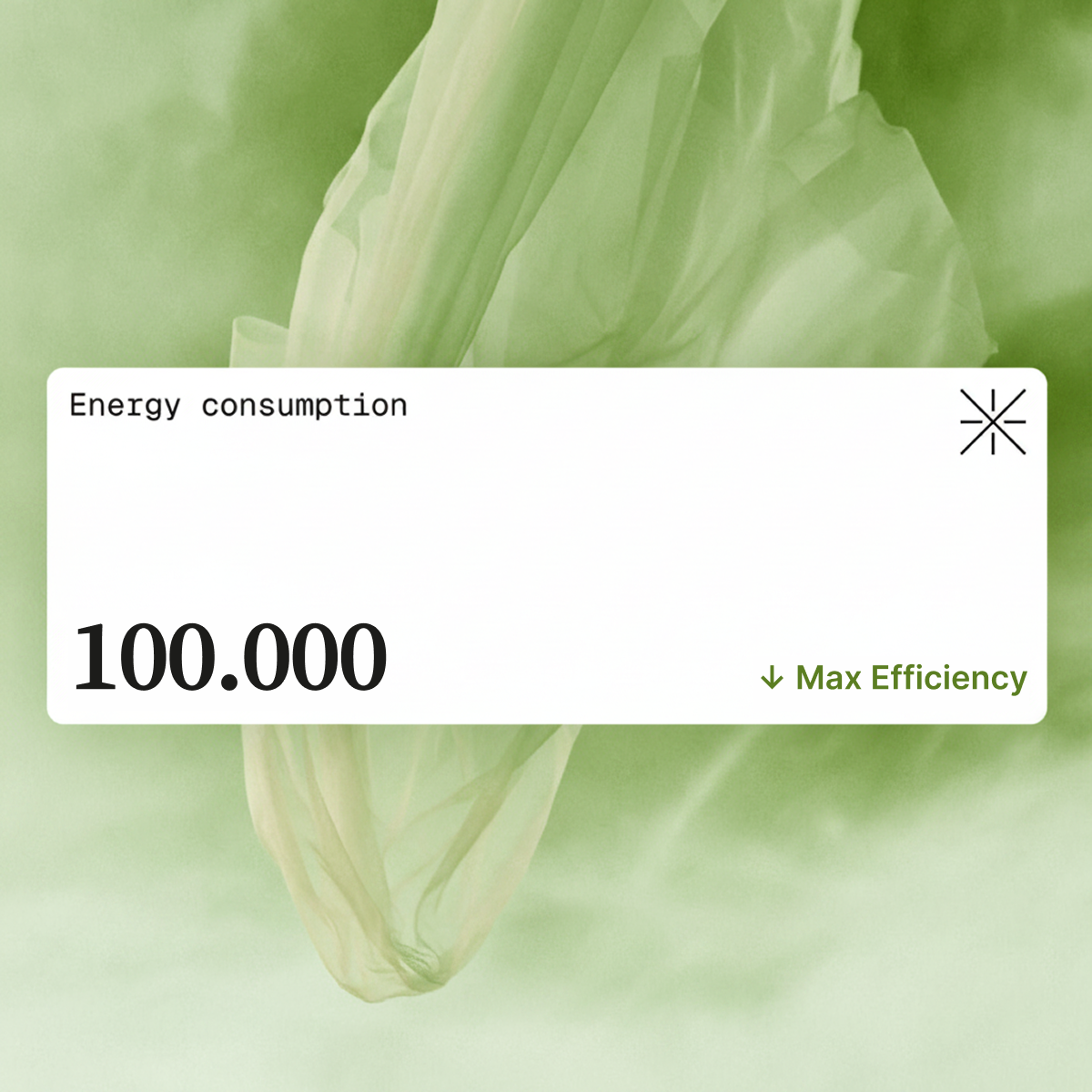
UI card displaying energy consumption data on a light fabric background

Max Efficiency

100.000

  • Environmental

    01

  • Catching clashes before construction cuts rework — and the material waste and embodied carbon it creates.

  • Public value

    02

  • Fewer additional orders mean lower public cost and restored stakeholder trust in public construction.

  • Expertise

    03

  • Junior architects can catch the critical issues that today require scarce senior reviewers.

© 2026 clashvision

Imprint

Privacy Policy

tech

data

EU-first

earth

AI Review Layer

for Construction Documents

A new intelligence layer for construction coordination

- detect inconsistencies in 2D drawings today,

and turn every review decision into reusable project memory.

Problem

Manual coordination of design changes is costly — most of all in public construction.

In mid-size firms, a few senior architects are stretched thin while junior architects carry the review load. Decisions live scattered across PDF markups, emails and meeting notes — easily lost and impossible to reuse.

Frequent design changes

Manual cross-checking of frequent design changes increases risks to project timelines and budgets.

€70–85B

Invested annually in public construction in Germany.*1

High risk of errors

The manual process leads to additional orders — delays and increased public costs that undermine project efficiency and stakeholder trust in public construction initiatives.

40%

Average cost overruns - 50–60% driven by mid-project design changes.*2

*1 Destatis, Public Budget Expenditures for Construction (2024).

*2 Hertie School of Governance, Large Infrastructure Projects in Germany (2022); Ernst & Young, Construction & Real Estate Survey; Roland Berger, Construction Radar 2024–25.

MVP

See coordination clashes,

in context.

Compared drawings, automatically detected clashes, and a per-issue review panel — exported to a marked-up PDF.

Software dashboard showing sustainability metrics including energy use, emissions trend, and goal progress

ClashVision supports coordination and surfaces potential issues for review — it does not replace licensed professionals and does not grant approvals. Valid approval must always be obtained from qualified architects and engineers.

Early MVP Preview. This prototype is provided for illustrative purposes only, and features, workflows, and outputs may change as development progresses. ClashVision is being developed with privacy-by-design principles and GDPR-aligned data handling practices in mind. Customers retain ownership of their project data, documents, and generated outputs at all times. All concepts, workflows, and technologies presented on this website are proprietary to ClashVision and are protected by applicable intellectual property laws.

Supported by

How it works

From manual checking to

AI-assisted review.

Every change, comment and decision becomes traceable — in one workflow.

Upload

Drop in your 2D drawings — PNG, JPEG or rasterized PDF.

AI Review

AI vision flags clashes and inconsistencies automatically.

Issue Structuring

Findings become structured, traceable issues with history.

Review Timeline

A searchable record of every decision over time.

  • Icon of an arrow pointing up right

    Detect inconsistencies

    AI-assisted review of 2D drawings catches the critical points a tired reviewer skips.

  • Icon of an arrow pointing up right

    Structure every finding

    Turn review comments into traceable issues — not lost in inboxes and PDFs.

  • Icon of an arrow pointing up right

    Preserve decisions

    Keep design rationale across revisions and projects, ready to reuse.

The platform

Detect today. Remember tomorrow.

ClashVision grows from a review engine into the firm’s design-decision memory — value that compounds the longer you use it.

Icon of concentric circles representing a target

Detect

AI vision identifies clashes and inconsistencies — walls against cable trays, ducts and pipes — with a marked-up PDF and clash report.

Today

Icon of an abstract globe

Structure

Every comment, change and decision becomes a traceable, structured issue with full revision history.

With funding

Icon of an arrow pointing up right

Remember

A searchable design-decision memory (RAG) makes past reviews instantly reusable across revisions and projects.

The moat

Impact

Less waste, lower public cost,

restored trust.

Catching inconsistencies before construction reduces rework — and the material waste, public cost and lost trust that come with it.

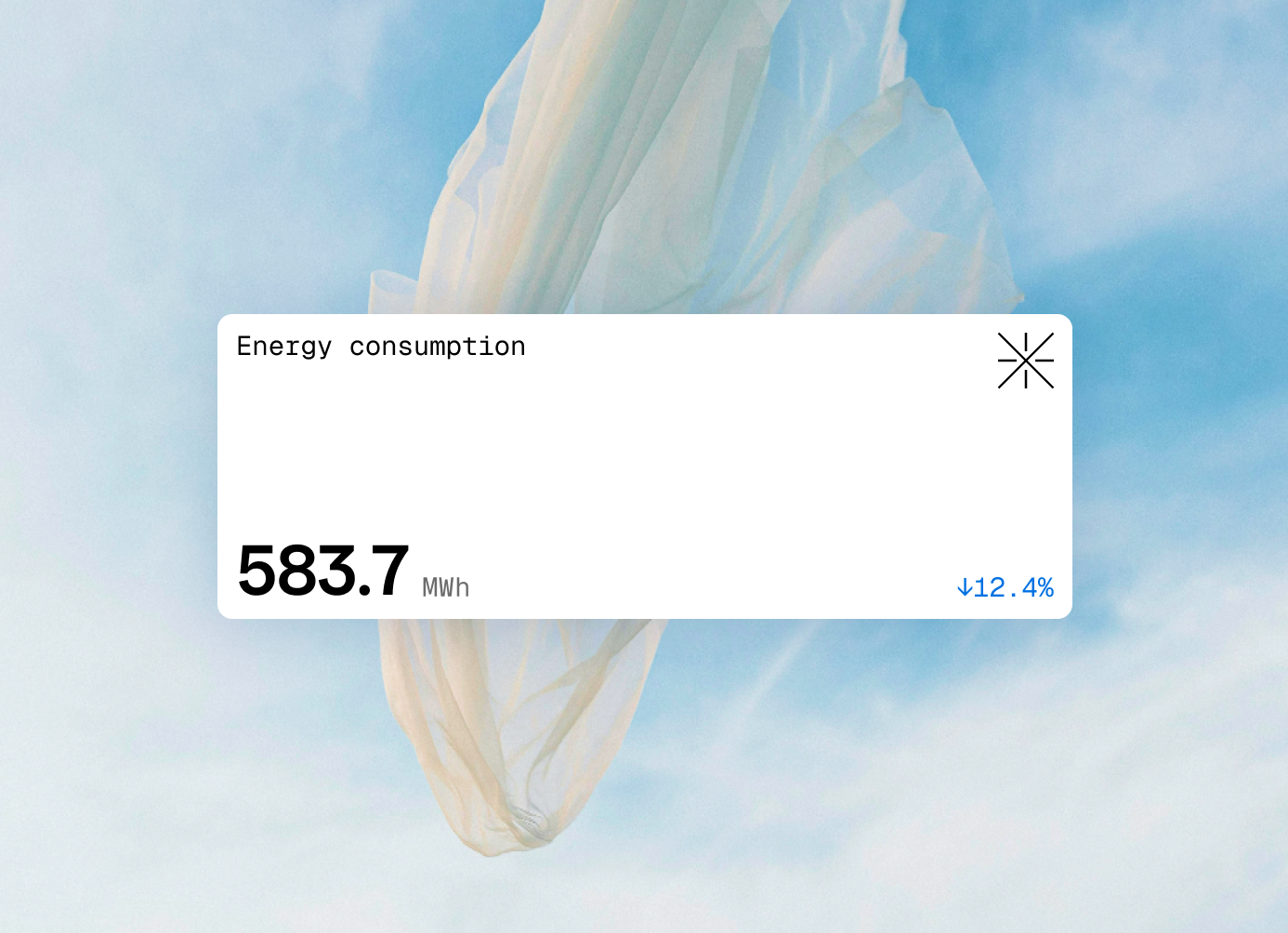
UI card displaying energy consumption data on a light fabric background
  • Environmental

    01

  • Catching clashes before construction cuts rework — and the material waste and embodied carbon it creates.

  • Public value

    02

  • Fewer additional orders mean lower public cost and restored stakeholder trust in public construction.

  • Expertise

    03

  • Junior architects can catch the critical issues that today require scarce senior reviewers.

© 2026 clashvision

Imprint

Privacy Policy

tech

data

EU-first

earth

AI Review Layer

for Construction Documents

A new intelligence layer for construction coordination

- detect inconsistencies in 2D drawings today,

and turn every review decision into reusable project memory.

Problem

Manual coordination of design changes

is costly — most of all in public construction.

In mid-size firms, a few senior architects are stretched thin while junior architects carry the review load. Decisions live scattered across PDF markups, emails and meeting notes — easily lost and impossible to reuse.

*1 Destatis, Public Budget Expenditures for Construction (2024).

*2 Hertie School of Governance, Large Infrastructure Projects in Germany (2022); Ernst & Young, Construction & Real Estate Survey; Roland Berger, Construction Radar 2024–25.

Frequent design changes

Manual cross-checking of frequent design changes increases risks to project timelines and budgets.

€70–85B

Invested annually

in public construction in Germany.*1

High risk of errors

The manual process leads to additional orders — delays and increased public costs that undermine project efficiency and stakeholder trust in public construction initiatives.

40%

Average cost overruns

50–60% driven by mid-project design changes.*2

MVP

See coordination clashes, in context.

Compared drawings, automatically detected clashes, and a per-issue review panel — exported to a marked-up PDF.

Software dashboard showing sustainability metrics including energy use, emissions trend, and goal progress

ClashVision supports coordination and surfaces potential issues for review — it does not replace licensed professionals and does not grant approvals. Valid approval must always be obtained from qualified architects and engineers.

Early MVP Preview. This prototype is provided for illustrative purposes only, and features, workflows, and outputs may change as development progresses. ClashVision is being developed with privacy-by-design principles and GDPR-aligned data handling practices in mind. Customers retain ownership of their project data, documents, and generated outputs at all times. All concepts, workflows, and technologies presented on this website are proprietary to ClashVision and are protected by applicable intellectual property laws.

Supported by

How it works

From manual checking to

AI-assisted review.

Every change, comment and decision becomes traceable — in one workflow.

Upload

Drop in your 2D drawings — PNG, JPEG or rasterized PDF.

AI Review

AI vision flags clashes and inconsistencies automatically.

Issue Structuring

Findings become structured, traceable issues with history.

Review Timeline

A searchable record of every decision over time.

  • Icon of an arrow pointing up right

    Detect inconsistencies

    AI-assisted review of 2D drawings catches the critical points a tired reviewer skips.

  • Icon of an arrow pointing up right

    Structure every finding

    Turn review comments into traceable issues — not lost in inboxes and PDFs.

  • Icon of an arrow pointing up right

    Preserve decisions

    Keep design rationale across revisions and projects, ready to reuse.

The platform

Detect today. Remember tomorrow.

ClashVision grows from a review engine into the firm’s design-decision memory — value that compounds the longer you use it.

Icon of concentric circles representing a target

Detect

AI vision identifies clashes and inconsistencies — walls against cable trays, ducts and pipes — with a marked-up PDF and clash report.

Today

Icon of an abstract globe

Structure

Every comment, change and decision becomes a traceable, structured issue with full revision history.

With funding

Icon of an arrow pointing up right

Remember

A searchable design-decision memory (RAG) makes past reviews instantly reusable across revisions and projects.

The moat

Impact

Less waste, lower public cost,

restored trust.

Catching inconsistencies before construction reduces rework — and the material waste, public cost and lost trust that come with it.

UI card displaying energy consumption data on a light fabric background
  • Environmental

    01

  • Catching clashes before construction cuts rework — and the material waste and embodied carbon it creates.

  • Public value

    02

  • Fewer additional orders mean lower public cost and restored stakeholder trust in public construction.

  • Expertise

    03

  • Junior architects can catch the critical issues that today require scarce senior reviewers.

© 2026 clashvision

Imprint

Privacy Policy

tech

data

EU-first

earth